How AI Voice Transcription Works
You just walked out of a thirty-minute meeting. Your head is swimming with action items, half-baked ideas, and that one thing your manager said that you absolutely cannot forget. You pull out your phone, hit record, and brain-dump everything in about ninety seconds. You upload the recording, and a few moments later, a clean, accurate transcript shows up on your screen.
It feels like magic. But what actually happened between your voice and that block of text? The journey from sound wave to written word is one of the most genuinely fascinating processes in modern tech, and nobody really talks about how it works.
Your Voice Is Not Letters. It Is Vibrating Air.
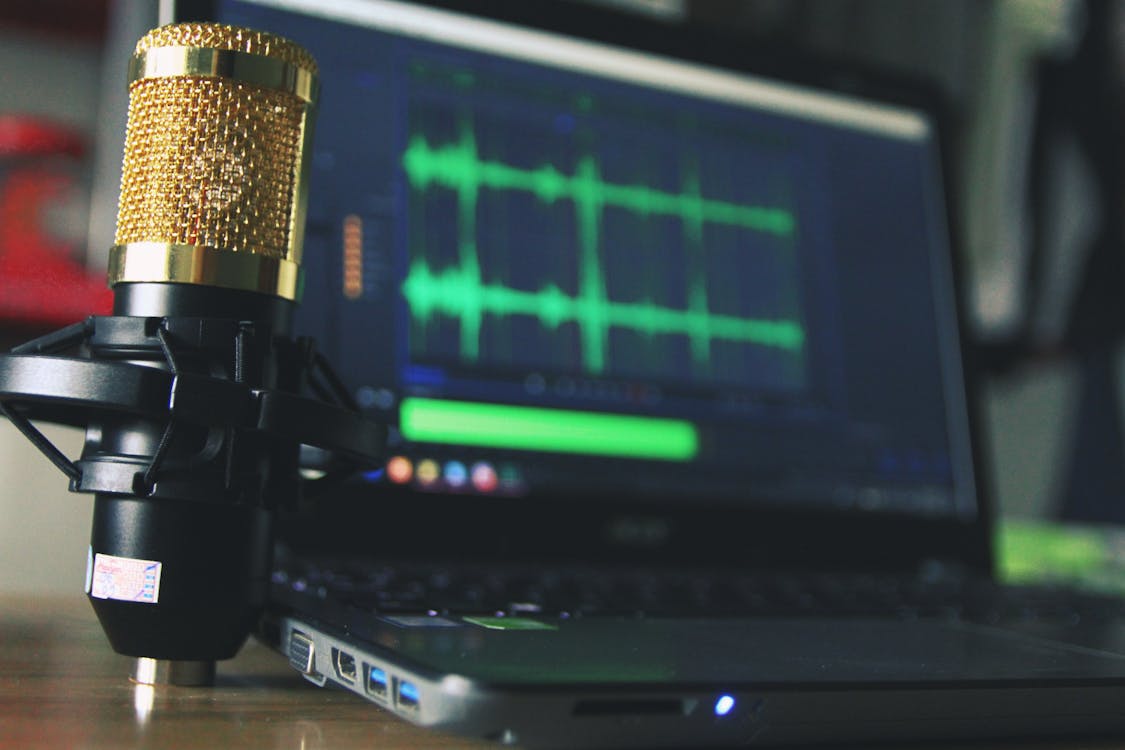
When you speak, your vocal cords vibrate and push waves of air pressure outward. Those waves reach a microphone, which converts them into a digital signal, a massive river of numbers that changes thousands of times per second.
That is all the computer gets. Not words. Not syllables. Not even sounds in any human sense. Just numbers. And by themselves, those numbers are completely meaningless, like staring at a mosaic from the far end of a football stadium. You see dots of color, but nothing clicks until you find the right vantage point.
Step One: Turn Sound into a Picture
Here is the part that surprises most people. One of the very first things a speech recognition system does is convert that audio signal into something visual, a spectrogram. Picture a heat map where time runs left to right, frequency goes bottom to top, and color intensity shows how loud each frequency is at any given moment.
That spectrogram is what the AI actually "sees." Instead of trying to make sense of raw numerical streams, it looks for visual patterns. Think about how you recognize your mom's voice on the phone within the first half-second, you are not consciously decomposing frequencies. Your brain just knows the pattern. The AI is doing something surprisingly similar, except it learned those patterns from data rather than from growing up in your house.
Learning by Immersion, Like Moving Abroad Without a Textbook
Think about how a toddler picks up language. Nobody sits them down with a grammar workbook. They hear their parents, their siblings, cartoons, strangers at the grocery store, thousands of sentences in thousands of different situations. Over time, their brain starts building connections: this cluster of sounds means that thing, these words tend to show up together.
AI learns the same way, just absurdly faster. During training, a model gets fed millions of hours of recorded speech paired with the correct written transcriptions. Every single example tightens its internal map of how sound shapes correspond to language.
Imagine someone who moved to a foreign country and lived there for a decade without ever opening a grammar book. They cannot explain the rules, but they understand the language instinctively, because they have absorbed it through sheer volume of exposure. That is roughly what happens inside the model.
Context Is the Real Secret Weapon
This is where things get genuinely clever. Modern transcription systems do not just match sounds to letters one at a time. They run a language model alongside the acoustic analysis, a system that understands which words naturally follow other words in real speech.
Quick example: the system hears a sound that could be "there" or "their." Based on acoustics alone, it is a coin flip. But if the sentence so far is "They left ___ jackets in the car", the language model knows "their" is the right call. That constant back-and-forth between what it hears and what makes sense in context is the reason modern AI transcription has gotten so remarkably accurate, even with noisy or imperfect audio.
Layers on Layers
The system works at multiple levels simultaneously. It breaks audio into the smallest meaningful sound units, called phonemes, groups those into syllables, syllables into words, words into full sentences. Each layer feeds information up to the next. The result is a rich, layered comprehension of what was spoken, not just a flat string of characters guessed one at a time.
The Hard Part: People Do Not Talk Like News Anchors
If every human spoke like a calm broadcaster in a soundproofed studio, this entire problem would have been solved a long time ago. But real speech is messy. Wonderfully, chaotically messy.
People talk fast. They swallow syllables. They switch languages mid-sentence, "So the deadline yaani is next Thursday." They pepper in filler words every few seconds. The mic picks up the air conditioner humming, traffic noise, someone's toddler yelling in the next room. And sometimes the recording quality is just genuinely terrible.
A good voice-to-text system has to power through all of that, the speed shifts, the mumbling, the background chaos, the code-switching, and still produce a transcript you can actually read and use.
Why Dialect Awareness Changes Everything
This brings us to something that does not get nearly enough attention , especially if you speak Arabic.
Arabic in everyday life is not one language. Egyptian Arabic, Gulf Arabic, Levantine, and Maghrebi Arabic differ massively in vocabulary, pronunciation, and sentence structure. A model trained exclusively on Modern Standard Arabic will stumble hard the moment it encounters real conversational speech. It is a bit like training an AI on Shakespearean English and then pointing it at a podcast recorded in Lagos or Atlanta, the gap between the training data and reality is just too wide. (For a deeper look at why this is so challenging, see Transcribing Arabic Dialects.)
The phrase "How are you?" alone has at least five completely different forms across the major Arabic dialects. A system that only recognizes the formal textbook version is missing most of what hundreds of millions of people actually say every day.
This is exactly the kind of challenge that Mufakkir was built around, understanding not just the raw sounds, but the dialectal and cultural context behind the words. That is the gap between a transcript riddled with errors and one that genuinely captures what was said.
The Full Journey: Air Vibration to Text on Screen
Let us trace the whole path:
- You speak, and your microphone converts air vibrations into a digital signal
- That signal gets transformed into a spectrogram, a visual "picture" of your voice
- A neural network scans the spectrogram and extracts speech patterns
- A language model places those patterns in context and picks the most probable words
- The finished text appears on your screen
The whole thing takes seconds. And it is improving constantly, models keep getting more accurate, faster, and dramatically better at handling how people actually talk versus how a textbook says they should.
Next time you record a voice note and watch your words materialize as text, take a beat to appreciate what just happened. A vibration in the air traveled through a spectrogram, through layers of neural pattern recognition, through a language model weighing billions of possibilities, and landed as a word on your screen. It is one of those things that feels like magic until you see the mechanics. And honestly? The mechanics are even better than the magic.